Brooks & Hart Pest Solutions
Ant Control Near You
Ant control finds the colony—not just the trail—using baiting, entry-point work, and exterior perimeter treatment matched to the ant species in your home.
(800) 555-0198Call a local specialist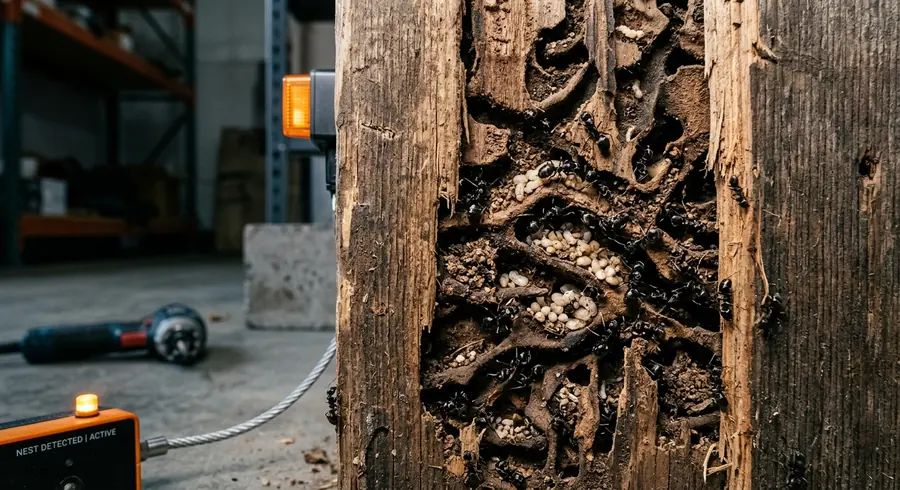
Ant control near you starts with stopping the colony—not just wiping the trail on the counter. Professional ant control and ant exterminator services combine species ID, slow-acting bait, and exterior perimeter work so kitchen ants, sugar ants, and carpenter ants stop coming back.
Ant control near you: what the service includes
A complete ant control visit usually covers:
- **Inspection and species ID** — Sugar ants, Argentine ants, odorous house ants, pavement ants, and carpenter ants need different baits
- **Slow-acting ant baiting** — Workers carry treatment to the nest, including queens in many species
- **Non-repellent treatments** — Ants walk through treated zones instead of avoiding them
- **Entry-point and trail work** — Baseboards, sinks, windows, and pipe gaps
- **Exterior ant perimeter treatment** — Foundation banding that reduces new foragers
- **Follow-up** — Adjust bait if the first matrix is ignored
Ant baiting vs ant spray for kitchen colonies
Homeowners comparing ant baiting vs ant spray learn quickly that contact spray kills foragers and can make trails worse. Some species **bud** (split nests) when sprayed. The purpose of professional ant exterminator work is colony collapse—see why ant spray makes ants worse and how long ant bait takes.
Carpenter ants vs termites and other homeowner questions
- Kids and pets: ask about placement and re-entry times (pet-safe pest control questions)
- Still seeing ants after bait? Often normal for days while bait is shared
- Large ants or wood shavings? Rule out carpenter ants vs termites
- After rain invasions: sugar ants in the kitchen after rain
Common ant control pain points
- DIY sprays that scatter trails into new rooms
- Wrong bait or spray applied on top of bait
- Expecting same-day zero ants
- Spray-only visits that never reach the nest
Related ant control resources
- Outdoor ant perimeter treatment explained
- How to choose licensed pest control
- All pest control services
Common signs
- Lines of ants on counters, sinks, or baseboards
- Ant activity around pet food or sticky spills
- Piles of wood shavings or hollow-sounding wood (carpenter ants)
- Winged ants indoors in spring
- Heavier indoor trails after rain
What’s usually included
- Species identification before treatment
- Colony baiting plus exterior perimeter options
- Guidance so you do not sabotage bait with DIY spray
- Follow-up when activity persists
- Pet- and family-aware product choices when you ask
FAQ
Why do ants come back after I spray?
Spray usually kills only the workers you hit. The nest keeps sending more. Repellent sprays can also push ants into new routes. Baiting and non-repellent treatments aim at the colony instead.
How long does ant bait take?
Often several days to a few weeks, depending on species and colony size. Seeing ants on bait can mean it is working—do not spray them off the bait stations.
What does a typical ant service include?
Inspection, species ID, interior bait or crack-and-crevice work, exterior perimeter treatment when useful, exclusion tips, and a follow-up plan if activity continues.