Ants ·
Carpenter Ants vs Termites: How to Tell Which Pest Is in Your Wood
Both chew into wood, but the damage, the droppings, and the repair bill are very different. Here is how to tell carpenter ants vs termites at home.
By Brooks & Hart Pest Solutions Editorial
Finding sawdust under a window frame or a swarm of winged insects near a basement light is unsettling, and the first question is always the same: is this carpenter ants or termites? The two pests are easy to confuse from a distance, but they behave differently, damage wood differently, and cost very different amounts to fix. Learning how to tell carpenter ants vs termites helps you know whether you are looking at a moisture repair or a structural problem. Homeowners comparing how to tell carpenter ants from termites usually want a clear next step, not another can of spray.
For hands-on help, see our ant control services.
Carpenter ants vs termites: what homeowners need to know
Termites eat wood. They digest cellulose, so the wood itself is food, and a colony can consume a surprising amount of framing over a few years. Carpenter ants do not eat wood at all. They chew through it to build galleries for nesting, then push the shavings back out. They are looking for shelter, not a meal, and they strongly prefer wood that is already soft from moisture.
That single distinction shapes everything else. Termite damage tends to be widespread and slow-growing. Carpenter ant damage tends to be concentrated in a damp area, which usually means there is a leak or drainage problem to fix along with the pest.
How to tell carpenter ants from termites
If you can get a look at a single insect, especially a winged one during a spring swarm, the body will answer the question for you.
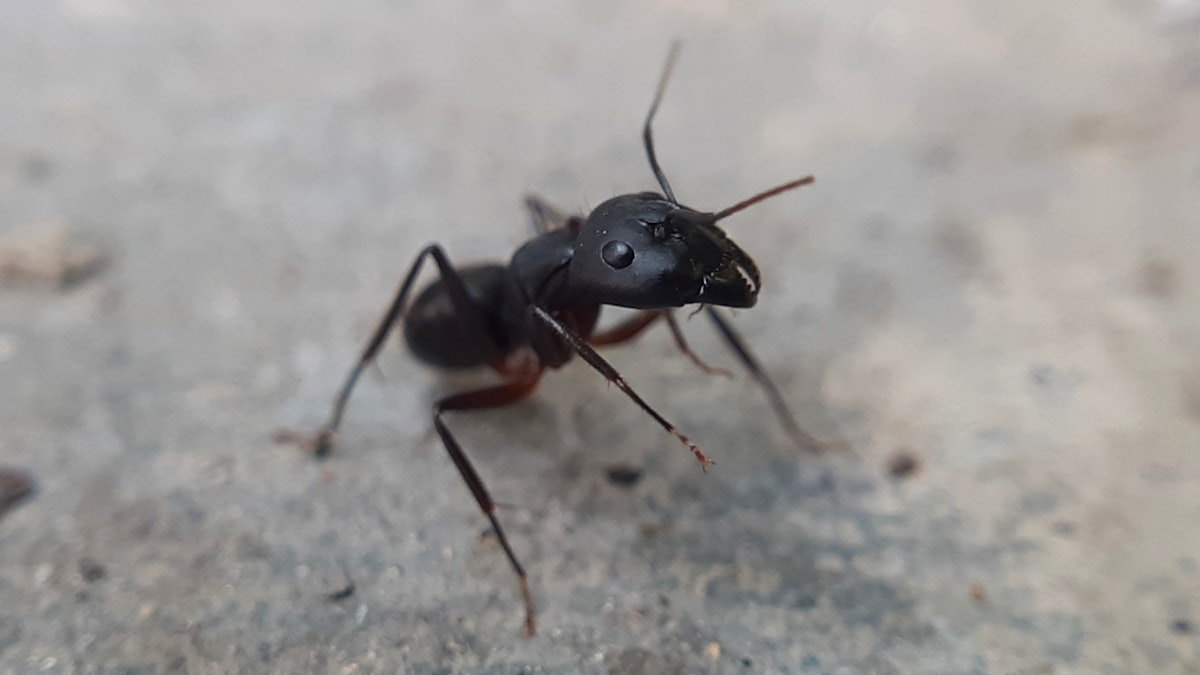
- Waist: carpenter ants have a narrow pinched waist; termites have a straight, thick body with no visible waist
- Antennae: ant antennae are bent or elbowed; termite antennae are straight and slightly beaded
- Wings: swarming ants have two pairs of unequal wings, with the front pair longer; termites have four wings of nearly equal length that extend well past the body
- Color: carpenter ants are usually black or black and red and clearly visible; termite workers are pale, soft, and cream colored
- Shed wings: piles of equal-length discarded wings on a window sill point strongly to termites
Termite workers avoid light and open air, so you rarely see them. If you are watching insects walk across a deck rail in daylight, you are almost certainly watching ants.
Carpenter ant vs termite damage
This is the clue most homeowners can check without any experience. Carpenter ants produce frass that looks like coarse sawdust or pencil shavings, often mixed with insect body parts and bits of insulation. It piles up in small cones below the nest entrance, commonly under a window sill, along a deck ledger board, or beneath a basement beam.
Termites produce nothing like that. Subterranean termites pack their tunnels with soil and moisture and build mud tubes about the width of a pencil along foundation walls and piers. Drywood termites push out tiny hard pellets that look more like coffee grounds or fine seeds than shavings.
- Sawdust cones and shavings: carpenter ants
- Pencil-width mud tubes on concrete: subterranean termites
- Gritty pellets that feel hard between your fingers: drywood termites
Damage patterns inside the wood
If you can open up damaged wood, the interior looks noticeably different. Carpenter ant galleries are smooth, clean, and almost sanded looking, with no soil and no debris inside. They often follow the soft grain of water-damaged wood.
Termite galleries are messier. Subterranean termite tunnels contain mud, soil, and a papery residue, and the wood often has a layered or honeycombed appearance where the softer growth rings were eaten first. Tapping the surface of termite-damaged wood frequently produces a hollow or papery sound because only a thin shell remains.
Where each pest usually shows up
Both pests need certain conditions, and knowing their preferences helps you narrow the search.
- Carpenter ants: around leaking windows, roof valleys, chimney flashing, wet deck framing, dishwasher and bathroom walls, hollow doors, and dead tree limbs near the roofline
- Termites: at soil-to-wood contact points, foundation walls, crawl space posts, sill plates, garage door frames, and anywhere mulch or grading holds moisture against the structure
If your problem sits high on the house near a roof leak, carpenter ants are the likely answer. If it sits low near the ground and soil, think termites first.
Why the treatments are not interchangeable
Carpenter ant control is usually a combination of bait, targeted treatment of the nest gallery, and correcting the moisture source that softened the wood. If you kill the ants but leave the leaking gutter or the sprinkler spraying the siding, a new colony often moves into the same soft wood within a year or two.
Termite control is a bigger commitment and comes in two main forms. Liquid soil treatments create a treated zone around the foundation that termites must cross, and they typically come with a renewable warranty. Bait systems place monitoring stations in the soil around the home and use a growth-inhibiting bait to collapse the colony over months, with ongoing station checks. Both are legitimate approaches, but they need professional application and follow-up inspection.
- Spraying carpenter ant trails without finding the nest usually just scatters them
- Spraying a termite tube accomplishes almost nothing, since the colony lives in the soil
- Neither pest is a do-it-yourself project once damage is structural
Questions worth asking before treatment
- Which species did you actually identify, and where is the nest or entry point
- Is there a moisture problem contributing to this, and how do I correct it
- For termites, are you proposing bait or liquid, and what does the warranty cover
- Is the company licensed and insured, and can I see proof
- How are products applied around pets, children, and food surfaces
What the repair side looks like
The financial difference between these two pests is significant, and it is worth understanding before you get a quote. Carpenter ant damage is usually localized because the ants follow moisture. Repairs often mean replacing a rotted window sill, a section of deck ledger, a soffit board, or a piece of fascia, along with fixing the leak or drainage issue that softened the wood in the first place. It is unpleasant but manageable, and it is normal maintenance work for most carpenters.
Termite damage is harder to scope because the colony works out of sight for years. By the time flooring flexes or a wall feels soft, the affected area can include sill plates, floor joists, subfloor, and wall studs. Replacing framing members requires temporary support and permits in many areas. Homeowners insurance generally excludes termite damage, treating it as preventable maintenance, so the full cost usually lands on you.
- Carpenter ants: fix the water source, replace the soft wood, treat the nest
- Termites: professional treatment plus potential structural repair and ongoing warranty coverage
- Both: annual inspection is far cheaper than either repair
The bottom line
Carpenter ants and termites both hollow out wood, but ants are opportunists that follow moisture and leave sawdust behind, while termites are silent feeders that consume the wood itself and hide behind mud. If you see coarse shavings and large black ants in daylight, you likely have a moisture repair plus an ant problem. If you see mud tubes, hollow-sounding wood, or piles of equal-length wings, treat it as a termite issue and get a professional inspection quickly, because termite repair costs climb the longer the colony works undisturbed.
Related carpenter ants vs termites resources
If you are dealing with carpenter ants vs termites, these pages go deeper: