Millipedes ·
Why Millipedes Invade Homes After Heavy Rain
Finding dozens of millipedes overnight is unsettling. Here is why millipedes invade after heavy rain and how to stop the next wave.
By Brooks & Hart Pest Solutions Editorial
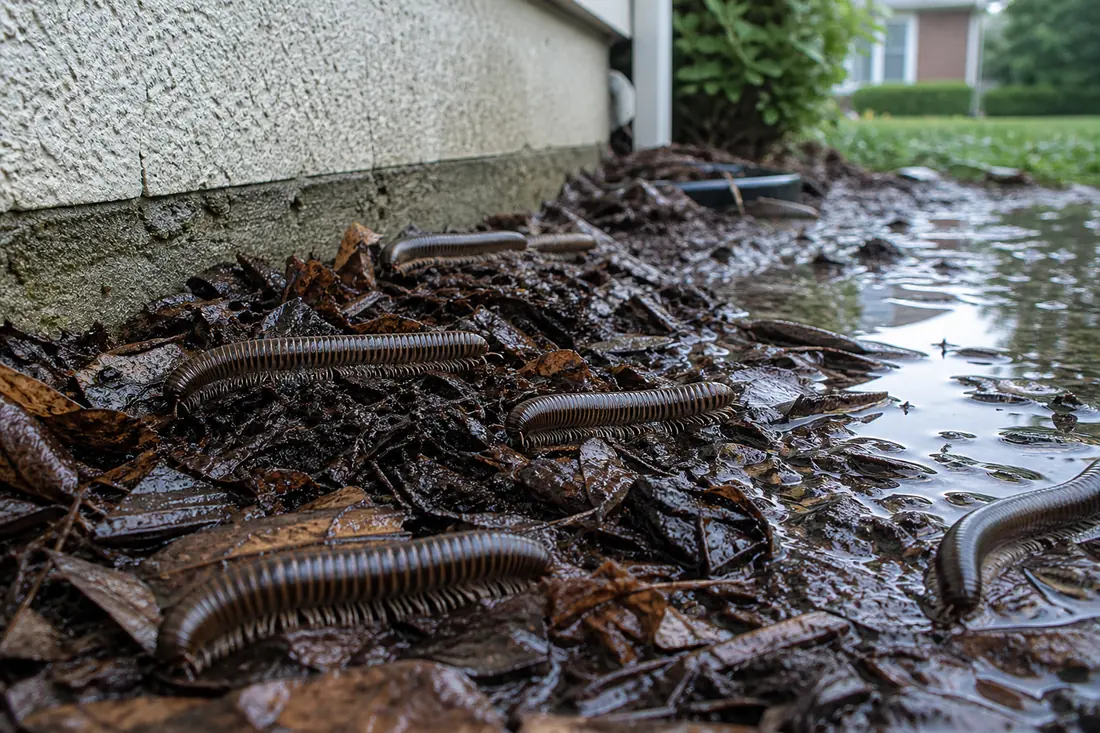
Millipedes invading after heavy rain is one of the searches homeowners make when DIY fixes stop working. Few pest situations feel as overwhelming as walking outside after a storm to find dozens of millipedes crawling across the patio, driveway, or foundation. Unlike many pests that show up gradually, millipedes tend to appear suddenly and in large numbers. Understanding why millipedes invade after heavy rain makes these sudden waves much less alarming, and much easier to manage.
For hands-on help, see our centipede and millipede control.
Millipedes invading after heavy rain: what homeowners need to know
Millipedes live in soil, mulch, leaf litter, and other decaying organic material, where they feed on decomposing plant matter. They breathe through small pores along their bodies and need consistent moisture to survive, but they cannot tolerate being submerged. When heavy rain saturates the soil and floods the burrows and leaf litter millipedes normally live in, they surface all at once, moving toward higher, drier ground, which very often includes your foundation, patio, or garage.
Millipede invasion after rain
- Mulch beds and leaf piles hold moisture and organic matter close to your foundation
- Foundations sit slightly higher than surrounding saturated soil, making them an easy retreat
- Gaps around doors, garage thresholds, and foundation vents give millipedes an accessible path indoors
- Porch lights and exterior lighting can add to the number found near entry points at night
Stop millipedes coming inside
Millipedes have long, cylindrical, segmented bodies with two pairs of legs per segment, moving in a slow, wave-like motion. When disturbed, they typically curl into a tight spiral rather than running or biting. They do not sting, do not spread disease, and cause no structural damage. The main issue is the sheer number that can show up at once, along with a musty odor and stains they can leave if crushed.
Reducing millipede numbers around your home
- Rake and remove excess leaf litter, especially piles resting against the foundation
- Keep mulch beds pulled back at least six inches from siding
- Improve drainage and grading so rainwater flows away from the foundation instead of pooling
- Trim ground cover and vegetation touching exterior walls
- Turn compost piles regularly and keep them away from the house
Sealing entry points and what to do if millipedes get inside
Even outside a heavy rain event, sealing common gaps reduces how many millipedes make it indoors during the next wave. Install or repair door sweeps on exterior and garage doors, caulk gaps around foundation vents, pipes, and utility lines, check weatherstripping on ground-level windows and basement entries, and repair any cracks in the foundation where soil moisture can seep through. Indoors, millipedes usually die within a day or two since they cannot survive without consistent outdoor moisture. Sweeping or vacuuming them up is generally enough; no additional treatment is typically needed for millipedes found only indoors after a storm.
Why millipede invasions can vary so much year to year
Millipede populations tend to follow multi-year cycles tied to weather patterns, soil conditions, and food availability, which is why some years bring almost no millipede activity while others bring a very noticeable wave after rain. A particularly wet spring following a mild winter often produces larger millipede populations by summer. If this year's invasion after heavy rain seems worse than in previous years, it may reflect a genuinely larger outdoor population rather than any change in your home specifically.
Distinguishing millipedes from centipedes and worms
Millipedes are sometimes mistaken for centipedes or even large worms, especially when curled up. The clearest way to tell them apart is leg count and speed: millipedes have two pairs of legs per body segment and move slowly, while centipedes have one pair per segment and move quickly. Millipedes also curl into a tight spiral when threatened, something neither centipedes nor worms typically do.
Cleaning up and planning ahead for the next rainy season
After a large group of millipedes has died indoors, sweeping or vacuuming them up promptly prevents any lingering odor. Wiping down the affected area afterward with a mild cleaner removes any residue and discourages other insects from being drawn to the smell. Since millipede invasions often follow a predictable pattern tied to heavy rain, doing preventive yard work before the rainy season starts, clearing leaf litter, pulling mulch back, and improving drainage in early spring, is far more effective than reacting after millipedes have already appeared.
How millipedes fit into the broader outdoor ecosystem
It is worth remembering that millipedes play a genuinely useful role outdoors, breaking down leaf litter, fallen wood, and other decaying material into nutrients that enrich garden soil. This is part of why complete elimination outdoors is neither realistic nor necessary; the goal for most homeowners is simply reducing the conditions that push large numbers toward the foundation after rain.
A quick reference for the next storm
Once you have made a few preventive changes, it helps to have a short mental checklist ready for the next heavy rain: check for millipede activity near the foundation the following morning, sweep up any that made it indoors, and note whether numbers seem better or worse than the previous season. Comparing storm to storm over a year or two gives you a much clearer sense of whether your prevention efforts, like reduced mulch and improved drainage, are actually paying off.
Frequently asked questions
**Are millipedes harmful to my garden plants?** Millipedes primarily feed on decaying organic matter rather than living plants, so they are generally not considered a serious garden pest, though very large populations can occasionally nibble on seedlings already in poor condition.
**Do millipedes bite or sting?** Millipedes do not bite. Some species can release a mild defensive fluid when handled roughly, which can cause slight skin irritation in sensitive individuals, so it is best to sweep them up rather than handle them directly.
When to call a professional
If millipedes invade after heavy rain in very large numbers year after year, or if you are finding them indoors regularly rather than just after major storms, a pest control technician can apply a targeted exterior perimeter treatment timed ahead of the rainy season, along with recommendations on drainage and mulch placement specific to your property.
What to expect after a rain event
Millipede invasions follow weather, so the timing is fairly predictable once you know the pattern.
- Activity peaks in the day or two after heavy rain, especially in spring and fall
- Most millipedes found indoors die within a day or so because it is too dry for them
- A vacuum handles the ones already inside faster and more cleanly than any spray
- Numbers drop sharply once the soil dries and the mulch bed stops holding water
The bottom line
Millipedes come in after heavy rain because saturated soil drives them out of the mulch, leaf litter, and damp organic matter where they normally live. They do not bite, they do not damage anything, and they cannot survive indoors for long. The lasting fix is drainage and landscaping: thin the mulch, pull it back from the siding, extend downspouts, correct low spots, and seal the door sweeps and utility gaps they crawl through. Do that work once and the next big storm produces a few strays instead of a floor full of them.
Related millipedes invading after heavy rain resources
If you are dealing with millipedes invading after heavy rain, these pages go deeper: