Cockroaches ·
Gel Bait vs. Spray for Kitchen Roaches: Which Works Better?
Trying to pick a treatment at the store? Here is gel bait vs. spray for kitchen roaches, and why one usually works better long term.
By Brooks & Hart Pest Solutions Editorial
Gel bait vs spray for kitchen roaches is one of the searches homeowners make when DIY fixes stop working. Standing in the pest control aisle staring at spray cans and small syringes of gel bait, it is easy to grab whatever seems fastest. But gel bait vs. spray for kitchen roaches is not just a matter of preference. Each works in a fundamentally different way, and understanding that difference helps explain why one often controls roaches for much longer than the other.
For hands-on help, see our cockroach extermination.
Gel bait vs spray for kitchen roaches: what homeowners need to know
Contact sprays kill roaches on direct contact by disrupting their nervous system. They work quickly on roaches you can see, which makes them satisfying in the moment. However, sprays only affect roaches directly hit or those that walk across a treated surface shortly after application, and many roaches remain hidden in wall voids, under appliances, or inside cabinets where spray never reaches.
Cockroach gel bait vs spray
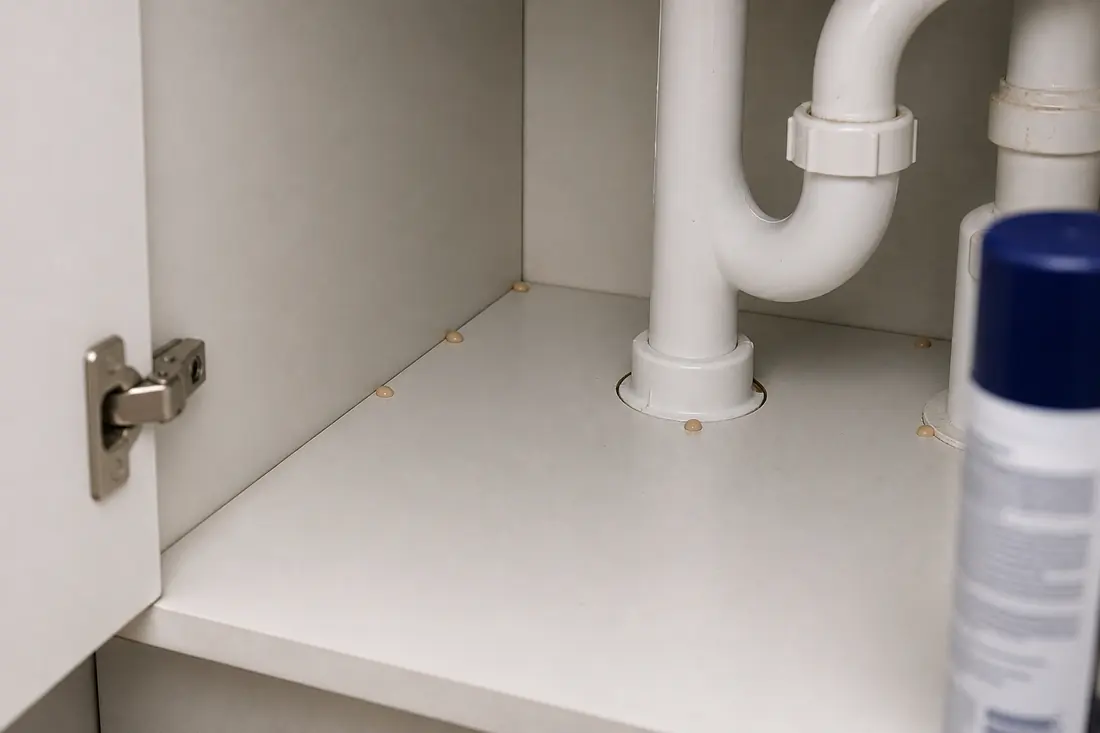
Gel bait is placed in small dots near roach activity, such as under sinks, behind appliances, or inside cabinet hinges. Roaches are attracted to the bait, eat it, and then return to their hiding spot before the slow-acting ingredient takes effect. Because roaches exhibit a behavior called coprophagy, meaning they eat feces from other roaches, and cannibalism of dead roaches, the bait's effect can spread through the group even to roaches that never touched the original bait dot.
Best treatment for kitchen German roaches
- Speed: sprays kill visible roaches almost immediately; gel bait takes days to reduce the hidden population
- Reach: sprays only affect exposed surfaces; gel bait reaches roaches hiding deep in cracks and voids
- Colony impact: sprays reduce visible numbers temporarily; gel bait can reduce the broader population over time
- Odor and mess: sprays often have a noticeable smell and residue; gel bait is discreet and low-odor
- Reapplication: sprayed surfaces need reapplication as residue breaks down; bait stays effective until roaches finish it
Why sprays alone often disappoint
Many homeowners spray a kitchen thoroughly, see fewer roaches for a few days, and then watch the population return within a week or two. This happens because spraying disrupts roaches on the surface without reaching those in wall voids, motor housings of appliances, or under cabinets, where they simply wait out the fumes and re-emerge once the residue fades.
Why gel bait tends to work better for lasting control
Gel bait targets the roaches that never leave hiding, including egg-carrying females that sprays rarely reach directly. Because roaches share bait through grooming and cannibalism, a well-placed set of bait points can reduce roach numbers over one to two weeks far more thoroughly than repeated spraying.
Best practices for using gel bait effectively
- Place small dots near cracks, hinges, and appliance edges rather than large blobs in the open
- Avoid spraying surfaces near bait placements, since some sprays repel roaches and prevent them from reaching the bait
- Clean up food debris and grease so the bait remains more attractive than easy food sources
- Reapply bait points periodically, since they dry out or get consumed over time
Is there a role for combining both methods?
While gel bait and spray work differently, some pest control approaches use both strategically rather than choosing one exclusively. A very light, targeted spray application in cracks and voids where roaches hide, combined with gel bait in high-traffic feeding areas, can address both the hidden population and any surface activity at the same time. The key is avoiding overlap, since spraying directly over or near gel bait placements can repel roaches from the bait, undoing much of its slow-acting benefit.
Why sanitation still matters even with the best product
Neither gel bait nor spray works as well in a kitchen with abundant food sources competing for roach attention. Grease buildup behind the stove, crumbs under appliances, and unsealed pet food all give roaches an easy alternative to bait, reducing how effectively bait spreads through the population. Keeping surfaces clean and food sealed significantly improves how well either product performs.
Why a heavy infestation may need more than either option alone
For a kitchen with a well-established roach population, gel bait and spray alone, even combined, may not fully resolve the issue if roaches have spread into wall voids, behind cabinetry, or into neighboring units in an apartment or townhouse setting. In these cases, additional tools like insect growth regulators, which interrupt roach reproduction, or dust formulations applied inside wall voids and behind outlet covers, are often added to a comprehensive treatment plan.
Recognizing when the source is outside your unit
In apartments, condos, and attached homes, kitchen roach problems sometimes originate from a neighboring unit rather than anything happening in your own kitchen. If gel bait and thorough cleaning are not reducing activity despite consistent effort, it is worth mentioning to your property manager or landlord, since roaches can travel through shared plumbing lines and wall voids between units.
Frequently asked questions
**How long does gel bait take to show results?** Most homeowners notice a meaningful reduction in visible roach activity within one to two weeks, though a very large infestation may take slightly longer as the bait works through a bigger population.
**Is gel bait safe to use in a kitchen with children or pets?** Gel bait is generally placed in small, discreet amounts inside cracks, hinges, and areas out of normal reach, making it lower risk than open spray application, but it should still be placed carefully and kept away from areas young children or pets can easily access.
When to call a professional
If gel bait and cleaning have reduced roach activity but a persistent population remains, or if the infestation is heavy enough that you are seeing roaches during the day, a pest control technician can combine professional-grade gel bait, growth regulators, and targeted crack-and-crevice treatment for a more complete solution than store-bought gel bait vs. spray for kitchen roaches typically provides on its own.
The bottom line
For kitchen roaches, gel bait and spray are not equivalent tools. Spray kills on contact and leaves a repellent surface, which pushes roaches deeper into cabinet voids, appliance motors, and wall cavities where you cannot reach them. Gel bait is carried back to harborage, and other roaches pick up a secondary dose from the ones that die there, so the treatment reaches the population you never see. Place small dots inside hinges, cabinet corners, under the sink, and behind appliances rather than smearing it on open surfaces, and stop spraying entirely once bait is down. Add an insect growth regulator, clean up grease and standing water, and expect several weeks and multiple rounds while each batch of eggs hatches.
Related gel bait vs spray for kitchen roaches resources
If you are dealing with gel bait vs spray for kitchen roaches, these pages go deeper: